When Systems Fail: Policy and Trafficking Vulnerability - Exploring how broader policy decisions influence prevention, protection, and survivor support

By Amanda Knapp, PhD, on behalf of the GAHTS Policy Workgroup
Published May 25, 2026
Introduction
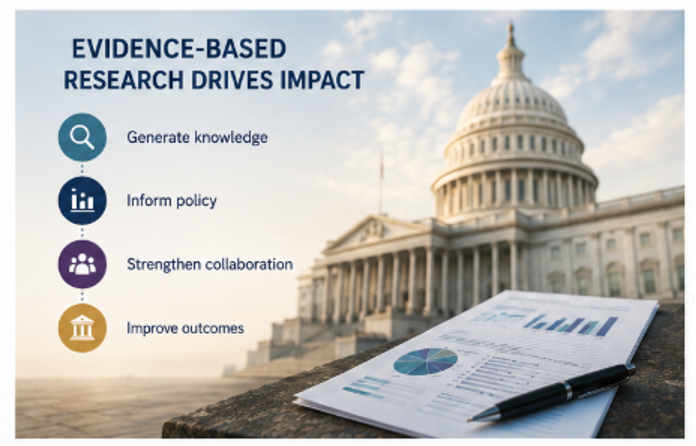
In February 2025, the Policy Workgroup was established in response to rapid changes within the Trump Administration that affected human trafficking research, data, and advocacy. The Workgroup was tasked with monitoring these developments and supporting evidence-based anti-trafficking policy through research, educational resources, public engagement, and partnerships. Shortly after its formation, the Workgroup submitted an open letter to the Trump Administration outlining major policy concerns. One year later, many of these concerns remained unresolved, and additional issues had emerged, prompting a second statement. Although human trafficking policy has historically been bipartisan and interdisciplinary, recent developments have led to increased politicization of issues impacting anti-trafficking efforts, which has hindered advocacy and support for victims and survivors. The Policy Workgroup asserts that vulnerability to trafficking is shaped not only by traffickers and criminal actors, but also by broader social, economic, labor, immigration, healthcare, disability, and civil rights policies.
“High-quality microlevel empirical studies can provide a superior, evidence-based foundation for the development of official policies regarding human trafficking.” 1
The TVPA and the Evolution of State Human Trafficking Legislation
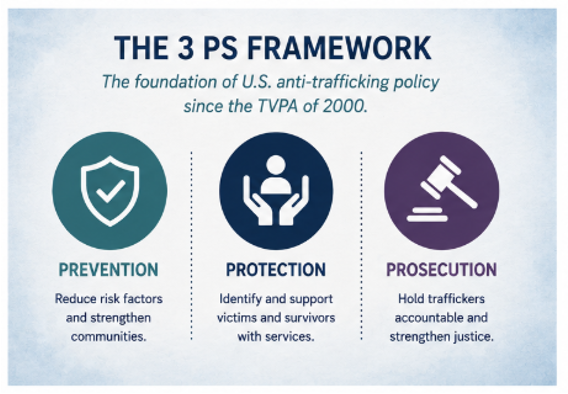
In 2000, the United States enacted its first comprehensive anti-human trafficking legislation, establishing the modern framework still in use today: the Trafficking Victims Protection Act of 2000 (TVPA). Developed with bipartisan congressional support and signed into law during the administration of Bill Clinton, the policy focused on the “3 Ps”: Prevention, Protection, and Prosecution, which continue to shape state laws, federal policy, and anti-trafficking program structures. The TVPA formally defined trafficking in persons, created new federal trafficking crimes and penalties, established protections and services for victims and survivors, introduced the T Visa for trafficking survivors, expanded federal funding and interagency coordination, and framed trafficking as both a criminal justice and human rights issue. Since the passage of the TVPA, anti-trafficking efforts in the United States have increasingly acknowledged that trafficking vulnerability is influenced by broader structural conditions, including immigration policy, labor protections, housing instability, discrimination, and economic inequality.
Since the passage of the TVPA, all 50 states have enacted anti-trafficking legislation, largely modeled around the framework of Prevention, Protection, and Prosecution. Scholars have identified the rapid adoption of state anti-trafficking laws as an example of political diffusion, whereby policy frameworks spread across jurisdictions through advocacy efforts, legislative networks, and shifting political priorities surrounding gender, crime, and victim protection.2 However, protections and services available to trafficking victims and survivors vary significantly across states, reflecting differing legislative priorities, funding structures, and approaches to victim identification and support. Over the past two decades, many states have increasingly moved beyond a solely criminal justice response toward recognizing the need for multi-system, prevention-oriented approaches to trafficking. The adoption of Safe Harbor laws for minors, vacatur and expungement statutes that provide criminal record relief for survivors, and specialized diversion courts designed to address the complex needs of trafficking victims reflects a broader shift toward survivor-centered and trauma-informed policy responses. These legislative developments demonstrate a growing recognition that effective anti-trafficking efforts require not only prosecution but also long-term structural interventions that address vulnerability, exploitation, and barriers to recovery.
Although anti-trafficking policy has expanded significantly since 2000, many current policy debates continue to shape the structural conditions that increase trafficking vulnerability.
Immigration Policy and Trafficking Vulnerability
Immigration policy remains a highly debated issue globally. In the United States, the last major bipartisan reform was the Immigration Reform and Control Act of 1986 (IRCA), which granted legal status to nearly three million undocumented immigrants and strengthened employer sanctions. While IRCA was historic, many scholars and policymakers believe its shortcomings have contributed to ongoing immigration challenges.3 Continued political polarization has stalled comprehensive reform, affecting policies that impact anti-human trafficking advocacy, prevention, and survivor support.
Research shows that restrictive immigration policies increase the risk of exploitation, while limited legal migration and employment opportunities push immigrants into vulnerable situations that traffickers exploit. Although labor and employment protections often apply to undocumented individuals, many trafficking victims remain unaware of their rights or fear contact with law enforcement and government agencies.4 Increased immigration enforcement and fear of deportation can discourage victims from reporting exploitation, seeking services, or cooperating with investigators. Institutional distrust further hinders victim identification and limits access to legal, medical, and social support.
The four primary forms of immigration relief available to undocumented trafficking survivors are Continued Presence status, the T-Visa, the U-Visa, and asylum.5 However, survivors often face significant barriers to accessing these protections, including lengthy processing times, limited legal representation, fear of retaliation, and requirements to cooperate with law enforcement and federal agencies, such as the Department of Homeland Security (DHS). Durr (2022) argues that immigration policy in the United States is often structured in ways that prioritize economic and enforcement interests over victim protection, stating that “the way the U.S. immigration system is currently run, it is designed to work against trafficking victims at every level” (p. 197). These challenges highlight the broader tension between immigration enforcement frameworks and survivor-centered anti-trafficking responses, particularly when policies prioritize deterrence and labor demands over long-term protection and prevention efforts.
Marginalized Communities and Trafficking Vulnerability
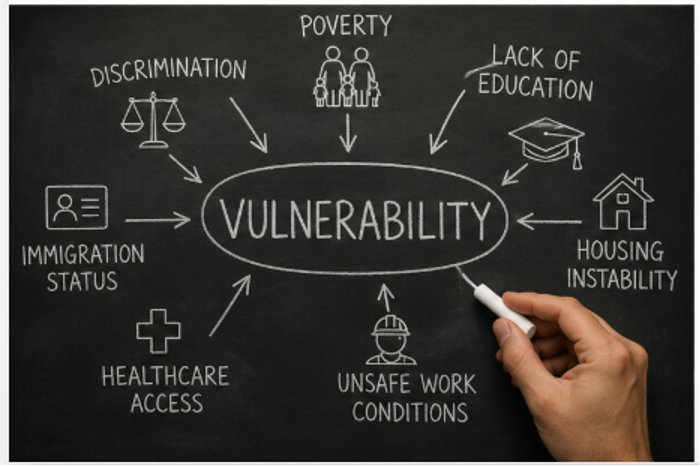
While any individual can become a victim of human trafficking, empirical evidence continues to identify common characteristics of male and female victims who experience structural inequities, poverty, and racism.6, 7 Scholars across multidisciplinary fields argue that anti-trafficking research and advocacy should incorporate cultural diversity and empathy into curricula, policy, and programming to address systemic oppression and bias.8 Recent federal policy changes affecting Diversity, Equity, and Inclusion (DEI) initiatives have raised concerns among researchers and advocacy organizations regarding access to affirming healthcare, housing, and support services that contribute to trafficking prevention and survivor support. Executive Orders affecting DEI initiatives, gender identity protections, federal contracting, and equity-related programming, including EO 14151, EO 14168, EO 14173, EO 14398, and the rescission of EO 14075 have intensified debates over protections for marginalized communities and the future of equity-focused research and services. Additional information on these Executive Orders is available below*.
LGBTQ+ Individuals and Trafficking Vulnerability
Research consistently identifies LGBTQ+ youth as disproportionately vulnerable to homelessness, survival economies, and trafficking victimization.9 Recent reports from Polaris indicate that LGBTQ+ individuals are among the populations at elevated risk for human trafficking, alongside many racial and ethnic minority communities.10 LGBTQ+ youth frequently experience family rejection, housing instability, discrimination, and barriers to supportive services, all of which increase vulnerability to exploitation. Despite these risks, research on LGBTQ+ trafficking remains significantly underdeveloped, and “transgender people are rarely included in human trafficking research.”11
Advocacy organizations have expressed concern about restrictions on terminology and reporting practices related to gender identity and LGBTQ+ issues. Freedom Network USA (2026) contends that such limitations may “silence survivors and force them to tell their personal experiences within state-sanctioned ways” (p. 26).12 Researchers and service providers warn that these policy shifts may result in funding interruptions, service limitations, legal uncertainty, and reduced visibility for LGBTQ+ trafficking survivors and other vulnerable populations.
Disability, Public Health Inequities, and Exploitation Risk
Human trafficking disproportionately impacts individuals experiencing social, economic, and health-related vulnerabilities. People with intersecting vulnerabilities and disabilities often experience higher rates of exploitation.13 Anti-human trafficking efforts have increasingly shifted toward a public health framework rather than relying solely on criminal justice responses.14 This shift recognizes that survivors frequently endure significant and long-term physical and mental health consequences, such as chronic illness, injury, trauma-related disorders, and barriers to accessing care. Research shows that trafficking is influenced by structural factors like poverty, housing instability, and inadequate access to healthcare, highlighting the need for coordinated, systems-level responses rather than relying solely on criminal justice interventions.
Individuals with disabilities are disproportionately targeted and face increased risks of exploitation due to systemic marginalization, reliance on caregivers, and gaps in protective services. According to the Centers for Disease Control (CDC), more than 61 million Americans, about 1 in 4, have a disability.15 Although research on trafficked individuals with disabilities is limited, Nicols and Heil (2022) provide a literature review with relevant findings. They found that between 2015 and 2017, 2,116 potential victims who contacted the national hotline had a pre-existing health concern or disability before their exploitation.16, 17 The World Health Organization and the United Nations both acknowledge that individuals with disabilities experience greater disadvantages than those without disabilities.18 When race and gender intersect, discrimination can intensify.
The Center for American Progress has highlighted several negative actions taken by the Trump Administration, including: “removing the federal government’s ability to enforce disability civil rights laws, undermining health care affordability and access for disabled people, destroying public health infrastructure that protects and supports the health and well-being of disabled people, stripping the ability of disabled children to receive free, appropriate public education, slashing services, benefits, and regulations that help keep disabled people in their communities, and decreasing disability protections in employment.”19 Weakening the rights of the disabled community increases burdens that can further heighten their vulnerability risks. Disability and public health inequities remain under examined in trafficking research and policy, despite clear evidence that barriers to healthcare, economic stability, and support services increase vulnerability to exploitation.20
Race, Ethnicity, and Structural Inequality
Vulnerability to human trafficking is deeply connected to broader systems of racial and economic inequality that affect access to housing, healthcare, employment, education, and legal protections. A public health approach requires analyzing social determinants, including systemic racism, that increase the risk of exploitation for certain groups. Scholars argue that structural racism, gender- and race-based prejudice, and poverty are directly linked to an individual's risk of exploitation.21, 22 Therefore, examining human trafficking through a racial and gender lens is essential to fully understand and address its root causes.
Integrating racial and ethnic frameworks into human trafficking research helps examine the systemic issues that contribute to increased vulnerability among marginalized communities.23 Racial and ethnic marginalized communities often experience disproportionate rates of poverty, housing instability, labor exploitation, community violence, and criminalization, all of which can increase susceptibility to trafficking and barriers to recovery. Research has also shown that minority victims are frequently under-identified, misidentified, or over-criminalized within legal and social service systems. These disparities demonstrate that trafficking vulnerability cannot be separated from broader systems of racial inequality and institutional discrimination.
Conclusion
After the enactment of the TVPA 2000, human trafficking laws slowly diffused throughout the 50 states.24 Public perception shaped which aspects of the "3Ps", prevention, protection, and prosecution, were emphasized. While some states have expanded protections for victims and survivors, others have focused primarily on prosecution. Over time, research has shown that vulnerability to trafficking is influenced by intersecting factors such as immigration policy, housing instability, discrimination, economic inequality, healthcare access, and systemic marginalization. As policy debates continue to impact these areas, it remains crucial for anti-trafficking efforts to focus on prevention, survivor protection, and long-term structural support.
Evidence-based, interdisciplinary research is essential for understanding the evolving nature of human trafficking and developing effective policy responses. Experts from criminal justice, public affairs, public health, sociology, social work, gender studies, and related fields agree that prosecution alone cannot address trafficking. Inclusive research practices, survivor-informed approaches, and accurate data collection are vital for identifying new vulnerabilities, evaluating interventions, and ensuring that policies do not inadvertently increase risks for marginalized communities. As a research- and evidence-based organization, the GAHTS Policy Workgroup is committed to supporting policies that prioritize prevention, protection, and survivor well-being. We promote collaborative, interdisciplinary, and evidence-informed approaches to anti-trafficking advocacy. Historically, human trafficking policy has been both bipartisan and interdisciplinary. Continued progress will require policymakers, researchers, practitioners, and advocates to work together to address the structural inequities that drive exploitation and vulnerability.
*Selected Executive Orders Impacting HT Research
EO 14151 - Ending Radical and Wasteful Government DEI Programs and Preferencing
EO 14173 - Ending Illegal Discrimination and Restoring Merit-Based Opportunity
EO 14168 - Defending Women from Gender Ideology Extremism and Restoring Biological Truth to the Federal Government
EO 14398 - Addressing DEI Discrimination by Federal Contractors
Rescission of EO 14075 Advancing Equality for Lesbian, Gay, Bisexual, Transgender, Queer, and Intersex Individuals
References
Weitzer, R. (2014). New Directions in Research on Human Trafficking. The ANNALS of the American Academy of Political and Social Science. https://doi.org/10.1177/0002716214521562
Bouché, V., & Wittmer, D. E. (2015). Gendered diffusion on gendered issues: the case of human trafficking. Journal of Public Policy, 35(1), 1–33. doi:10.1017/S0143814X1400021X
Chishti, M. and Kamasaki, C. (2014). IRCA in Retrospect: Guideposts for Today’s Immigration Reform. Migration Policy Institute.
ACLU. (2007). Human Trafficking: Modern Enslavement of Immigrant Women in the United States.
Durr, Stephanie. (2022). The intersection of the U.S. immigration system and human trafficking: legalized labor of injustice. Mississippi College Law Review, 40(1), 173-198.
Jones, Samuel Vincent (2010) "The Invisible Man: The Conscious Neglect of Men and Boys in the War on Human Trafficking," Utah Law Review, 4(7). https://doi.org/10.63140/5a45rv7pqs
Hume, D. L., & Sidun, N. M. (2017). Human Trafficking of Women and Girls: Characteristics, Commonalities, and Complexities. Women & Therapy, 40(1–2), 7–11. https://doi.org/10.1080/02703149.2016.1205904
Nichols, A. J., Preble, K., Cox, A., Nichols, E., & Amann, W. (2026). An Examination of Sex Trafficking by Race and Ethnicity in the State of Missouri on State and Local Levels: Implications for Anti-Oppressive Practice. Journal of Human Trafficking, 12(2), 211–226. https://doi.org/10.1080/23322705.2023.2225993
Nikkle, M. (2022). LGBTQ+ Human Trafficking Survivor Stories. The Exodus Road.
Polaris. (2026). Vulnerabilities & Recruitment.
Fehrenbacher, A. E., Musto, J., Hoefinger, H., Mai, N., Macioti, P. G., Giametta, C., & Bennachie, C. (2020). Transgender People and Human Trafficking: Intersectional Exclusion of Transgender Migrants and People of Color from Anti-trafficking Protection in the United States. Journal of Human Trafficking, 6(2), 182–194. https://doi.org/10.1080/23322705.2020.1690116
Freedom Network USA. (2025), Flying in the Face of Survivors: How the Trump Administration Dismantled Anti-Trafficking Services and Threatened Survivors in 2025.
Recknor, F., Di Ruggiero, E., & Jensen, E. (2022). Addressing human trafficking as a public health issue. Canadian Journal of Public Health, 113(Suppl 1), 1–3. https://doi.org/10.17269/s41997-022-00642-8
Cook, M. C., Le, P. D., & García, J. J. (2022). Addressing Racism in the Domestic Minor Sex Trafficking of Black Girls: The Role of Public Health Critical Race Praxis. Public health reports (Washington, D.C. : 1974), 137(1_suppl), 10S–16S. https://doi.org/10.1177/00333549211058735
Centers for Disease Control and Prevention. (2024). Disability and health care access. U.S. Department of Health and Human Services. https://www.cdc.gov/disability-and-health/articles-documents/disabilities-health-care-access.html
Recknor, F., Di Ruggiero, E., & Jensen, E. (2022). Addressing human trafficking as a public health issue. Canadian Journal of Public Health, 113(Suppl 1), 1–3. https://doi.org/10.17269/s41997-022-00642-8
United Nations Disability Inclusion Strategy (2018). https://www.un.org/en/content/disabilitystrategy/assets/documentation/UN_Disability_Inclusion_Strategy_english.pdf
World Health Organisation. (2011). World Report on Disability (The World Bank, Ed.). WHO Press. https://www.who.int/publications/i/item/9789241564182234
Ives-Rublee, M. & Doherty, C. (2025, April 3). The Trump administration’s war on disability. Center for American Progress.
Jagoe, C., Toh, P. Y. N., & Wylie, G. (2022). Disability and the risk of vulnerability to human trafficking: An analysis of case law. Journal of Human Trafficking, 10(1), 111–128. https://doi.org/10.1080/23322705.2022.2111507
Butler, C. (2015). The racial roots of human trafficking. UCLA Law Rev.62(1464):51.
Chong N. (2014). Human trafficking and sex industry: does ethnicity and race matter? J Intercultural Stud. 35(2):196-213.
Cook, M. C., Le, P. D., & García, J. J. (2022). Addressing Racism in the Domestic Minor Sex Trafficking of Black Girls: The Role of Public Health Critical Race Praxis. Public Health Reports. https://doi.org/10.1177/00333549211058735
Blanton, R. G., & Jones, P. A. (2023). Social construction and the diffusion of anti-trafficking laws in the U.S. Policy Studies Journal, 51(1), 163-185. https://doi.org/10.1111/psj.12451
About the Author
Amanda Knapp, PhD is a Research Assistant for an OVC-sponsored human trafficking diversion court project. Dr. Knapp is a researcher and policy advocate whose work focuses on human trafficking, public policy, and systems-level responses to exploitation. Her research examines trafficking vulnerability, diversion courts, immigration policy, disability justice, LGBTQ+ vulnerability, and survivor-centered approaches to prevention and intervention.