
New Forms of Slavery in the World of AI: Reflections on Pope Leo XIV's encyclical letter Magnifica Humanitas

By Matthew C. Clarke, MSc, MA, GDip & Wendy Stiver, RN, CCM, BSN, MA
Published June 29, 2026
“In the era of artificial intelligence, when human dignity is threatened by new forms of dehumanization, ours is the pressing duty to remain profoundly human.” (Pope Leo XIV, 2026, para. 15)
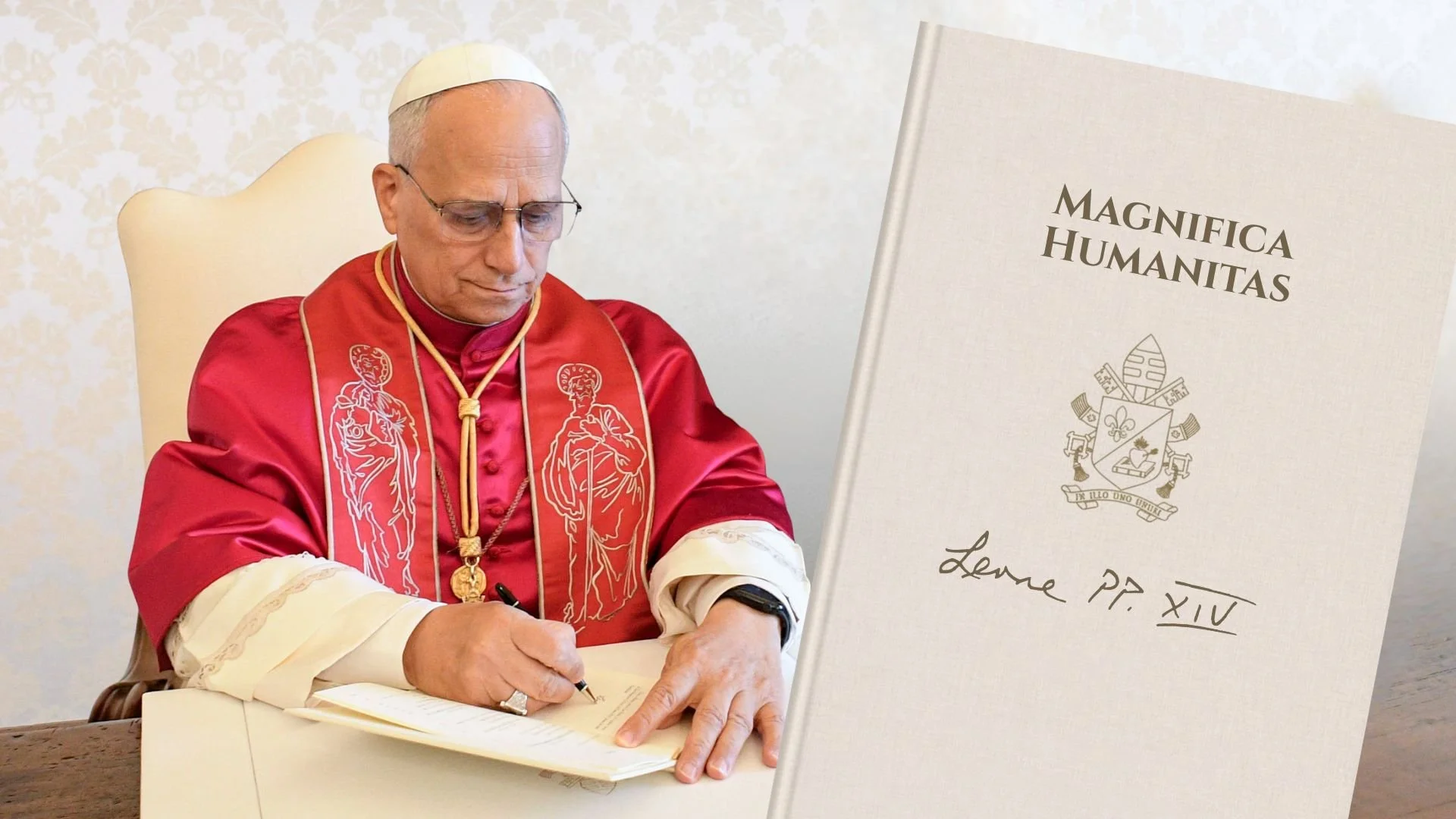
Pope Leo XIV, whose encyclical Magnifica Humanitas calls AI a test of whether we will let technology dehumanize us. Photo: EWTN News/Newscom.
Introduction
You may have seen media attention being given to Pope Leo XIV’s encyclical letter Magnifica Humanitas, with its commentary on artificial intelligence (AI) as well as its critique of the growing “culture of power”. What you might not have heard is that the encyclical also contains a section with the heading “Breaking the chains of new forms of slavery”.
Pope Leo is the global leader of one of the world’s largest and most influential organizations taking a moral stance on technological progress. So this is a significant document, and not just for those inside the Roman Catholic church.
A papal encyclical is a letter from a reigning Pope, historically addressed to other leaders in the Catholic church. Recent encyclicals are more like open letters, and this one by Pope Leo is clearly targeting an audience beyond the church walls. He provides a lengthy background to how the Catholic church relates to the wider world, and to the church’s perspective on the essence of being human. The Latin title, Magnifica Humanitas, points to his high view of the grandeur of humanity, and the encyclical’s primary concern is how we protect that essence in the face of the recent massive advances in large language models (LLMs) and robotics.
While many may reject Pope Leo’s Catholic assumptions, and be turned off by occasional gendered language (such as his repeated use of “fraternity”), his analysis of the impact of AI offers deep insights to those of any faith or none.
The Pope sees potential value in this new technology, but also sees negative influences through AI’s contribution to the centralization of power, the undermining of truth, the erosion of the common good, the injustices of slavery, and aggressive approaches to global conflict. The risk of AI, at its core, is the subversion of “the grandeur of the human person”.
We think most of us in the anti-trafficking movement recognize the dehumanizing impact (on both victims and perpetrators) of sexual abuses, labor exploitation, forced marriage, child soldiers, and organ trafficking. So it is interesting to see the linkages Pope Leo makes between the threat of dehumanization from AI and human trafficking.
Moral Foundations
Early chapters of the encyclical outline Catholic social doctrine. This starts with the understanding that humans are made in the image of God –
“Human dignity does not depend on a person’s abilities, wealth or position in life, nor on the right or wrong choices made; instead, it is a gift that precedes and transcends each person, endowed by God as an expression of his unfailing love.” (Pope Leo XIV, 2026, para. 50)
That belief is common to many religious traditions, but Pope Leo extends the idea by stating that “every person’s body is a dwelling place of God and a temple of the Holy Spirit. It is precisely this covenant between glory and fragility that becomes the criterion for evaluating the anthropological models offered by contemporary culture” (para. 239). This poetic and profound statement needs a bit of unpacking.
He is claiming not only that we were originally made in the image of God, but that we always continue to embody a covenant (that is, a binding and indissoluble alliance) between the glory of the infinite God and the fragility of finite material existence. What a beautiful image! It is like the way a woven fabric depends entirely on both the warp and the weft. The essence of a woven fabric is the interweaving of the two. Take away either thread and it ceases to be a fabric: it all falls apart.
This “covenant” between glory and fragility is a constitutive tension in the foundation of being human. The grandeur of humanity (the magnifica humanitas) derives from the interplay of both dimensions. From the Pope’s Christian perspective, any model of what it means to be human (any anthropology) that doesn’t take into account both covenant partners is fundamentally flawed.
Every form of slavery vandalizes the glory – the divinity – of the human essence. Transactional models that view people as commodities have lost sight of the transcendent half of the human harmony.
On the other side, any technological worldview that seeks to eliminate human fragility via digital transcendence or algorithmic optimization breaks the covenant by chasing a more-than-human future that ultimately makes us less than human.
Human rights are an inviolable expression of intrinsic dignity (para. 54-58) and emphasize the interplay between freedom and responsibility. Since we all share this same essence, we ought to structure the way we live together around the promotion of the common good. We are interdependent, and our collective efforts, including our political and economic structures, should be directed at allowing individuals and groups to “reach their fulfillment more fully and easily” (para. 59-64). In this we must act in solidarity because “the future of each individual is connected to the future of all” (para. 73-76).
Those principles lead to a necessary commitment to social justice. As we seek progress, no-one should be left behind. This applies particularly to the weakest, such as migrants, refugees, children, those in poverty, and those suffering violence (para. 77-81). All people should be assured of equal access to the earth’s resources (para. 65), as well as access to information, because truth too is a common good (para. 132-147).
Applying Catholic Social Doctrine to New Forms of Slavery
In this 82-page document, only two and a half pages directly relate to human trafficking, but it is not a superfluous insert: the logic flows smoothly from the moral foundations to a concern that AI already acts exploitatively towards those on the margins of society.
As you know, there is considerable disagreement about whether “modern slavery” or “human trafficking” are the most appropriate labels for the wide range of abuses they cover. Pope Leo prefers slavery (used 21 times) rather than trafficking (4 times), but he writes, “Human trafficking must be recognized as a contemporary form of slavery and a grave violation of human dignity” (para. 174).
He voices concern about the varied forms of servitude that arise because of the needs of the digital economy. AI is parasitic on humanity since it depends on “the silent work of millions of people”: providing the training data through immeasurable quantities of word, images, and sounds, as well as algorithm creation, data labeling, mineral extraction, the provision of electricity and water, etc. Many of the contributors are poor, disempowered, and often work in unsafe and exploitative conditions. “The bodies of these people are scarred, injured, and worn down so that computational flow may continue uninterruptedly” (para. 173).

The "silent work of millions" — data labelling, mineral extraction, water and power — keeping the computational flow running, largely out of sight.
The continuation and extension of slavery within this era of AI acts as a litmus test of how willing we are to allow technology to dehumanize us. We tend to accept technological progress because of its perceived efficiency, but "it is not enough to invoke efficiency, nor to celebrate the benefits of innovation, if they are built on a chain of exploitation that remains deliberately hidden" (para. 173).
Colonialism once used subjugated people to mine natural resources, but AI is a new form of colonialism that commodifies people, “transforming personal lives into exploitable information”. What then happens to respect for freedom and human dignity? To the extent that we become commodities in a network of financial transactions, we lose the essence of who we are.
His conclusions follow his moral foundations. People should not be enslaved nor commodified, because they have inherent value and dignity. Efficiency is not a sufficient criteria for progress, because on its own it does not take into account human rights. We are concerned for victims of human trafficking because our commitment to the common good and social justice has inspired us to build “a world in which everyone can flourish”.
Pope Leo’s encyclical is not just a statement of concern. It is also his call for a set of responsibilities to be shared throughout society: church, commerce, government, and “intermediary organizations” such as media, unions, and schools. Together, we need to…
rebuild trust (para. 181)
“cultivate hearts that love the truth” (para. 237)
“invest in education” (para. 238)
“cultivate relationships” (para. 239)
ensure “that shared knowledge becomes a true common good rather than an instrument of dominance” (para. 178)
“The supply chains that underpin the technological industry and the digital economy need to become more transparent, so that no competitive advantage is built upon hidden exploitation” (para. 179)
Companies and investors need to implement processes to verify that no one is being exploited (para. 179)
Undergirding all those recommendations is a call for all people of good will to “love justice and peace” (para. 240).
An official apology
In the middle of Pope Leo’s reflections on slavery is an apology. It is too long to quote here, though we recommend you read paragraph 176 in full sometime.
After noting the Church’s complicity in allowing – even supporting – slavery, he acknowledges it as “a wound in Christian memory”. It took too long for society, and the Church, to recognize the immorality of any form of slavery.
“It is impossible not to feel deep sorrow when contemplating the immense suffering and humiliation endured by so many in stark contrast to their immeasurable dignity as persons infinitely loved by the Lord. For this, in the name of the Church, I sincerely ask for pardon.” (para. 176)
The apology is not a radical change of policy but is nevertheless an important step for the Roman Catholic church. It follows the path of Pope Francis, who was a signatory to the Joint Declaration of Religious Leaders Against Modern Slavery (A United Faith against Modern Slavery, 2014). But this encyclical is probably the first official apology from the Roman Catholic church (Atayi, 2026). Some other Christian traditions have made similar apologies previously, such as the Anglican Church (2006 in England and the USA), and the Baptist Union of Great Britain (2007).
The encyclical does not make clear to whom the apology is being made, nor what actions might proceed from that apology, but it remains a significant step forward. In the context of AI, it is a call to vigilance, lest “the treasure of human dignity” be lost again.
Some Observations
Pope Leo’s observations in this encyclical must be read in the context of Catholic Social Doctrine. It is an essentially Christian response: “The living God descends into our history in order to free us from all forms of slavery” (para. 232). And yet, much of his problematization of AI and his suggested solutions bear the marks of universality: a stance he labels “Christian humanism” (para. 127-128). Readers may differ in their understanding of what grounds the assertion of the equal and irrevocable dignity of each person, and yet still agree with what flows from that assertion.
This encyclical also contributes to the broader global interfaith universe. While a full exploration of this universe must wait for another time, the historical reality is that while the major faith traditions have striven to glorify God, many of their actions have justified and encouraged oppression and slavery. None of us has clean hands in this regard.
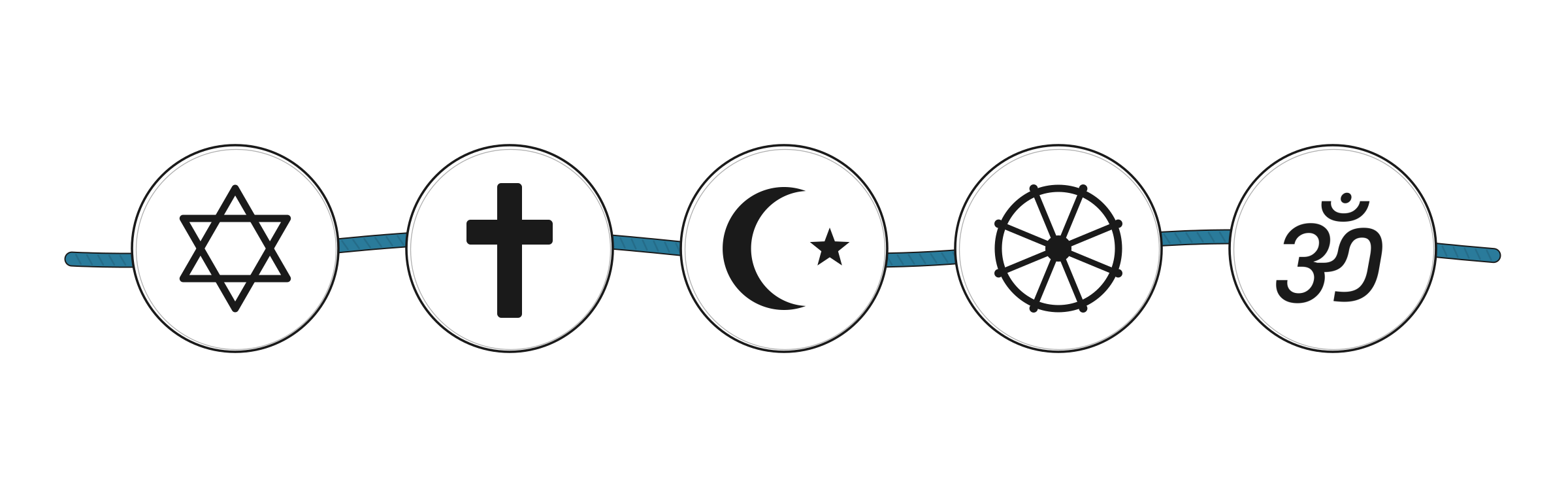
Judaism, Christianity, and Islam emerged from the same roots in the origin stories of the Jewish people. Perhaps the central narrative of the Hebrew Bible is the experience of slavery followed by Divine redemption: a narrative that has both informed Jewish concepts of social justice and inspired other oppressed people to strive for freedom. Christian abolitionists in England formed the world’s first anti-slavery movement, which spread throughout the British Empire.
Islam’s concept of justice is likewise rooted in God’s emphasis on compassion and justice: theological justice between humanity and God, and social justice between human beings in the political, economic, and interpersonal arenas.
These three faith traditions also emerged from a place and time in which slavery was widespread and accepted. While the sacred texts taught justice, the domination systems of the day often prevailed.
Buddhist belief in karma and reincarnation has also been used to rationalize and justify slavery, even though the eight-fold path teaches against slavery and trafficking.
Hinduism has been intrinsically linked with the caste system in India, which has been a tool of exploitation and control of the lower castes. Hindu activists worked to ban bonded labor slavery in 1976, among other anti-slavery reforms.
(See Free the Slaves’ article Faith in Action: Ending Slavery.)
Many other people of faith have written about human trafficking from their own faith perspective. Christian analyses all start with the idea of imago dei, but very few get any further theologically (Clarke, 2022). For that reason alone, the encyclical is a valuable statement, because, although the section on slavery is brief, it positions the Christian response to human trafficking in the context of human rights, freedom, justice and the common good.
Slavery and human trafficking have always co-opted the technology of the day to enable their abuses and to maximize their own gains. Just as ships empowered not only colonial expansion but also the trans-Atlantic slave trade, so the telegraph enabled almost real-time communication about slave market pricing (Deyle 2005, p. 112). In more recent years we could point to the borderless anonymity of the internet, criminal uses of cryptocurrencies, and the use of call centre telephony to entrap job seekers in scam compounds. That people will use AI to abuse others is no surprise, though it does seem to be happening very fast and out of anyone’s control.

Every era's technology has been turned to exploitation — the ship, the telegraph, the server, and now AI: the newest link in an old chain.
A call for us to act
However, the problem is not just “out there”. Pope Leo places a mirror in front of us all, forcing us to examine the seemingly hardwired human urge to “otherize,” to dehumanize, to commodify, and to enslave. We are forced to think about our complicity, even if we have never knowingly exploited another human. What have we done to feed the insatiable AI beast, to allow the centralization of power, or to create the demand for goods and services produced by abuse, coercion, and exploitation? And what might we do to challenge those dynamics for the common good?
I’d like to suggest that the Global Association of Human Trafficking Scholars (GAHTS) has a role to play.
Individually, we can all continue the conversation: in our academic circles, among anti-trafficking co-workers, and around the dinner table. We can reflect the solidarity Pope Leo espouses by continuing to live with kindness and compassion, slowing down to smell the roses and to embrace each other.
We can also rethink our attitudes and behaviours with respect to AI. Will we continue to stretch our own minds rather than outsource them to LLMs? Would we be prepared to pay if the provider of a LLM could assure us that they take the well-being of people and the planet seriously? Will we use those LLMs, and whatever form of AI comes next, to help design better ways to disrupt human trafficking?
As an association, GAHTS can contribute too, by encouraging deeper personal reflection and discussion among members. Could we work more closely with groups such as the Bali Process and the OSCE (Bennett, 2024), and Tech Against Trafficking? Or should we do some lobbying for public policy change in relation to AI ourselves? Is there any session in the upcoming International Human Trafficking & Social Justice Conference on exploitative uses of AI? Could we promote the Global Learning Community's Ethical Anti-Trafficking Practices: Guiding principles for faith-based organizations and perhaps extend that work to include the use of AI?
As Pope Leo wrote:
“If technology becomes the ultimate criterion, the human person risks being reduced to data, a cog in a machine or a commodity. If, however, technology is integrated with a wise perspective, it can become an instrument of growth, justice and fraternity.” (para. 180)
References
A united faith against modern slavery: The joint declaration of religious leaders against modern slavery (p. 80). (2014). Global Freedom Network. https://cdn.walkfree.org/content/uploads/2020/10/06154604/GFN-2-Dec-Vatican-Book-digital.pdf
Atayi, C. A. A. (2026, June 10). After Pope Leo’s Slavery Apology, the Harder Reckoning Begins. Jurist News. https://www.jurist.org/commentary/2026/06/after-pope-leos-slavery-apology-the-harder-reckoning-begins
Bennett, P. (with Cucos, R., & Winch, R.). (2024). New frontiers: The use of generative artificial intelligence to facilitate trafficking in persons (p. 33). OSCE (Organization for Security and Co-operation in Europe) and the Regional Support Office of the Bali Process. See also: https://rso.baliprocess.net/rso-osce-webinar-series-on-artificial-intelligence-and-trafficking-in-persons-brings-together-civil-society-private-sector-and-government-officials-to-discuss-challenges-and-responses
Clarke, M. C. (2022). Four Theological Schemas for Actively Responding to Modern Slavery. Journal of Sociology and Christianity, 12(1), 10–32. https://www.sociologyandchristianity.org/index.php/jsc/article/view/227
Deyle, S. (2005). Carry me back: The domestic slave trade in American life. Oxford University Press.
Pope Leo XIV. (2026). Encyclical letter—Magnifica Humanitas of his holiness Pope Leo XIV: on safeguarding the human person in the time of artificial intelligence. The Holy See. https://www.vatican.va/content/leo-xiv/en/encyclicals/documents/20260515-magnifica-humanitas.html
About the Authors
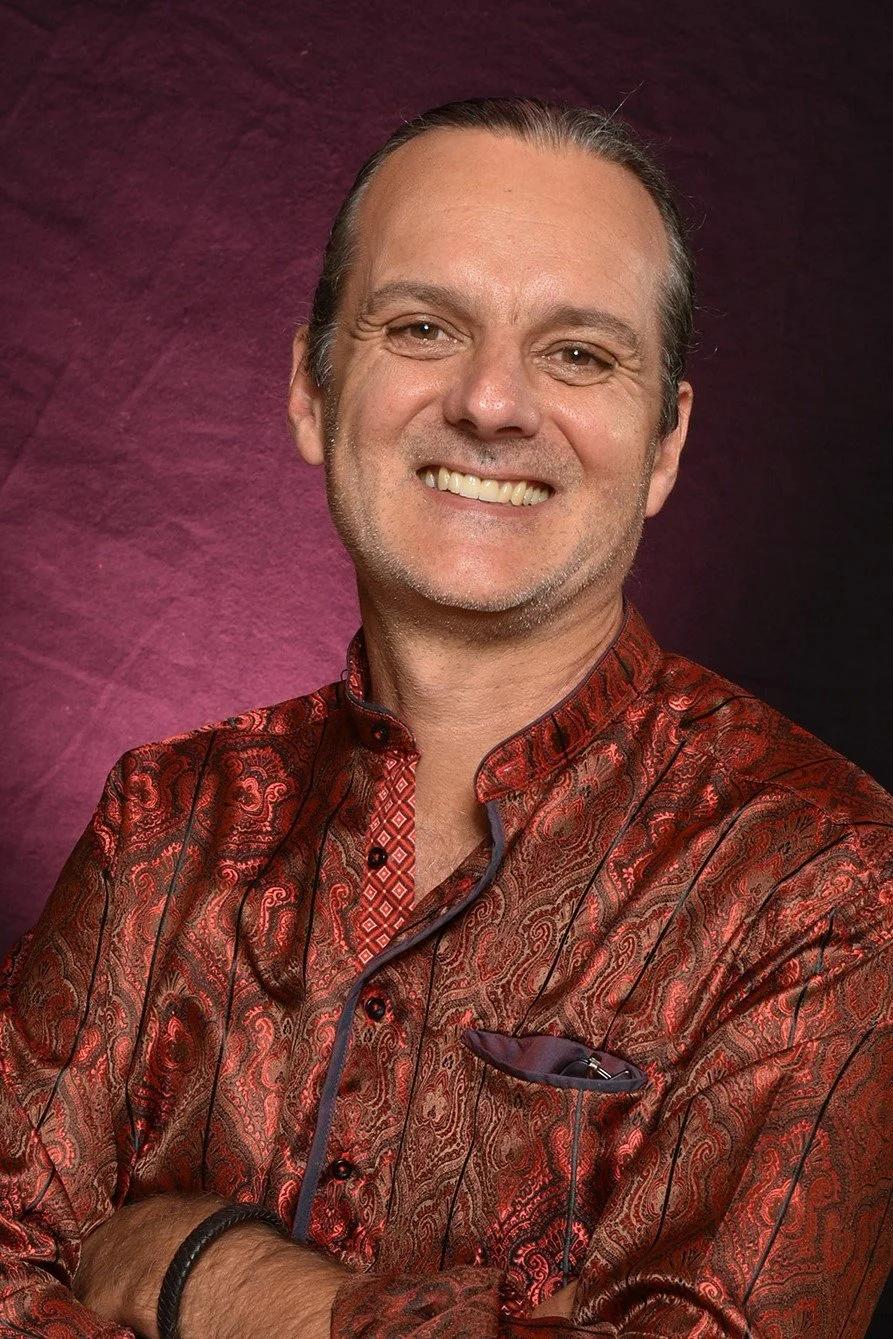
Matthew C. Clarke is a Senior Research Scholar with GAHTS, a Senior Member of the Australian Computer Society, and Principal Researcher for the Freedom Keys Research Project. Matthew’s long career weaves together information technology and community-based peace building. He worked in artificial intelligence development way back in the 1980’s, has led an international software company, was a senior lecturer in computer science, an information architect, knowledge manager, data analyst, and technology adviser. Matthew’s volunteer activities include peace building with the South African Council of Churches during the end of Apartheid and providing welfare services to commercial seafarers. His current research relates to understanding and engaging with the people who perpetrate the abuses, coercion, and exploitation of human trafficking. For more, see LinkedIn and ORCiD.
Wendy Stiver is a Research Scholar with the Global Association of Human Trafficking Scholars (GAHTS). A registered nurse and published author on trafficking and gender-based violence, her work is grounded in transcultural inclusion and social justice. She is currently exploring the ethics of AI in qualitative research. Ms. Stiver is also active in interfaith circles, both as a progressive Jew and a fully Professed member of St. Hildegard’s Community of Austin, Texas, an inclusive Episcopal canonical community committed to nonviolence, environmental activism, and contemplative practice. She is also a lay leader in the Keeping It Sacred community, based in Los Angeles, California. In 2022, she completed a four-year theological Education for Ministry curriculum through the University of the South School of Theology.