
Understanding and Engaging with Traffickers: A summary of "Individuals Involved in Human Trafficking in Indonesia: Characteristics, Perspectives, and Pathways to Prevention" by Dr Yuniar Sari

By Matthew C. Clarke, MSc, MA, GDip
Published July 27, 2026
Introduction
The global anti-trafficking movement spends a lot of time picking up the pieces after abuses have already occurred. That’s not all we do, but we do it a lot. We do some preventative work but for the most part, the anti-trafficking movement pays little attention to the role of traffickers. In 2020, I ran a survey among the 2,000 or more anti-trafficking organisations listed in the Global Modern Slavery Directory and found that only 26% have a documented theory of change that mentions perpetrators.
I’ve recently been pushing the following argument:
The only way to reduce human trafficking is to change the behaviours of traffickers. I mean that literally: there is no other way.
There is more than one way to do that, for instance threaten them with punishment, make their current behaviours unprofitable, or reduce the demand.
But whichever approach we take, if we want to disrupt the human trafficking system effectively and sustainably, we will need to understand what motivates traffickers’ behaviour a lot better than we do at the moment.

Although the anti-trafficking movement often makes assumptions about traffickers, real data is scarce. We do not know how many traffickers there are nor the ratio of victims to traffickers. We do not know how many traffickers were previously victims. We do not know how much money a trafficker makes on average. We do not know the proportion of traffickers who work within hierarchically organized crime syndicates compared to loose networks, or alone.
Among the few researchers who have contributed to our understanding of traffickers, some of the most detailed data comes from Austin Choi-Fitzpatrick’s What Slaveholders Think (2017), Chenda Keo’s Human Trafficking in Cambodia (2014), and David Gadd and Rose Broad’s Demystifying Modern Slavery (2022).
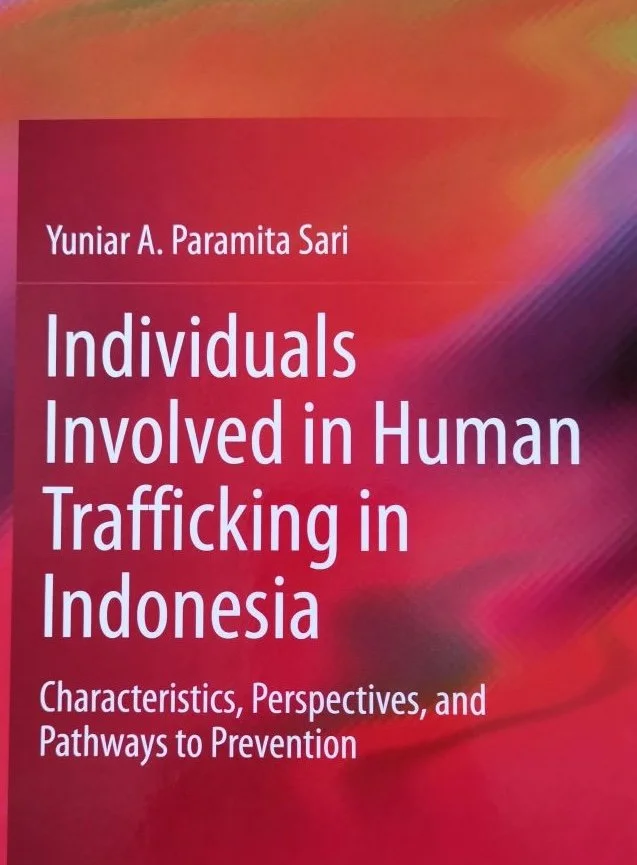
Yuniar Sari (2025) follows this “road less travelled” with her book Individuals Involved in Human Trafficking in Indonesia: Characteristics, Perspectives, and Pathways to Prevention. The book, an edited version of her 2021 PhD dissertation at the Royal Melbourne Institute of Technology (RMIT), adds significant data to this grossly under-documented aspect of human trafficking.
Overview
Sari’s research is qualitative in nature, and implicitly follows grounded theory, letting the data speak prior to any theory development. Her PhD research was based on 11 interviews with lawyers, 16 with anti-trafficking organizations, and 60 court documents. In this subsequent book, she adds data from four interviews “with people [who] supported and participated in human trafficking for [the] sex industry” (p. 3). The data sources are from the Indonesian island of Java, and cover trafficking for both the sex industry and domestic labour (in roughly equal proportions).
Sari stakes out her ground right from the beginning in this way:
Using the human rights-based approach and implementing the 3Ps framework means there is a limited discussion on how to prevent trafficking by discouraging individuals from committing human trafficking. The human rights-based approach focuses more on the victims and so does not put any significant effort into understanding the causes or reasons why people commit trafficking. (p. 1-2)
I completely agree with that assessment, and am glad to see her noting that …
Addressing the root causes of human trafficking cannot be done without understanding the motivations of the people who commit the crime. (p. 28)
… and that …
[W]hile prevention of human trafficking is one of the vital elements in the anti-trafficking process, there are very few prevention initiatives that have been implemented so far by any state to discourage or prevent a person from committing trafficking. (p. 26)
I would only add … “apart from the threat of punishment”, whose effectiveness as a deterrent in the context of human trafficking lacks substantial evidence.
Chapter Outline
The first few chapters chart the development of anti-trafficking policy in general, summarise the meagre existing research on traffickers, and then zooms in on Indonesia’s recent responses to human trafficking.
The core presentation and analysis of her data are then presented in Chapter 5 – on the socio-demographic characteristics of traffickers – and in Chapter 6 – on the internal motivations and external drivers of those traffickers. Chapter 7 is dedicated to the implications of the preceding analysis: what we might learn about how to prevent human trafficking through understanding traffickers.
Sari’s Observations
Sari’s work presents many important observations about the data that will hopefully inform Indonesian public policy and legal improvements. Some of those observations are:
There are significant differences in the socio-demographic characteristics and the motivational ecology of traffickers in the sex industry compared to the domestic labour context. As a result, interventions designed to prevent people from becoming traffickers need to be tailored according to the form of trafficking.
Up to about 17% of traffickers had been victims previously (p. 92).
The motivations of traffickers are heavily dependent on socio-cultural influences. They may be unaware of legal aspects or the punitive consequences of their actions. They may think they are helping their victims or even that they are acting as a saviour or champion. In some areas of Indonesia, a daughter can become a source of pride for her family when they traffic her into the sex industry (p. 128-142).
Most traffickers work in “loose structures and non-hierarchical relationships rather than established and formal organized criminal groups” (p. 108).
For the majority of traffickers, the primary motivation was economic benefit. That motive was normally related to lack of job opportunities, the need to earn to survive, and the perception of easy money. Economic benefit normally did not mean maintaining an extravagant lifestyle or earning large profits. Sex traffickers typically earned less than USD 30 per victim, and court documents for trafficking into domestic labour suggest that each trafficker earned on average less than USD200. (My calculations, based on the details on p. 112-114.)
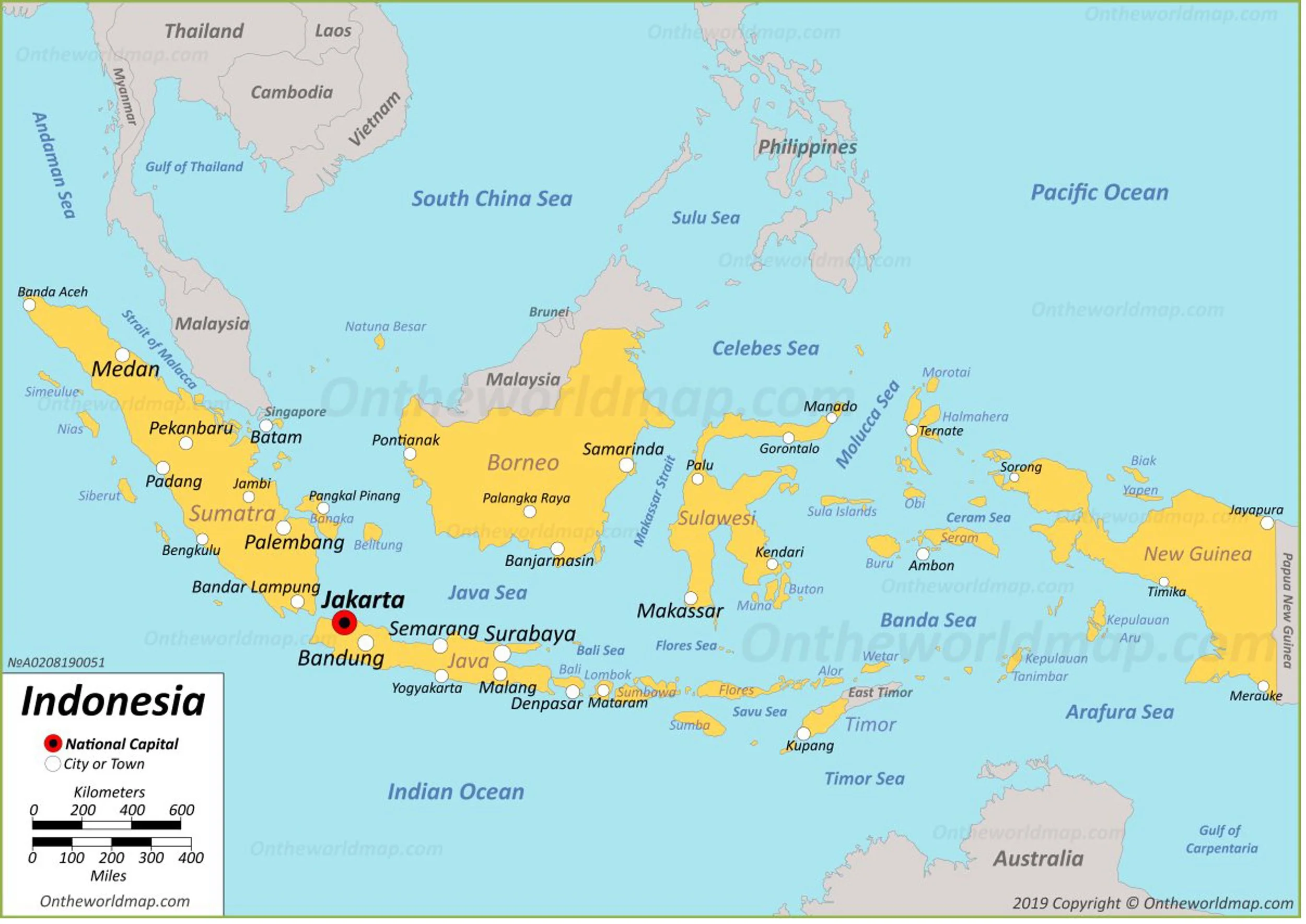
The nation of Indonesia, highlighting its capital Jakarta on the island of Java.
(Used with permission from https://ontheworldmap.com/indonesia)
Sari’s Recommendations
When Sari moves on to recommendations about effective ways to prevent people from becoming traffickers, she draws on Brantingham and Faust’s (1976) model of violence prevention, with primary, secondary, and tertiary components. Among her suggested prevention-oriented interventions are:
Strengthening local communities at known points of origin.
Speaking to traffickers to raise their awareness of the impact and legal consequences of their behaviour.
Creating other employment and entrepreneurial opportunities for people vulnerable to becoming traffickers.
Educating youth about human trafficking in schools.
Rehabilitation programs directed at trafficking offenders while they are in prison. Sari notes that no such program currently exists in Indonesia (p. 181).
Providing reintegration support after prison to reduce re-offense rates, and engaging reformed traffickers as advocates for change among their peers.
Considering the role of restorative justice.
Updating laws to acknowledge the factors that make people vulnerable to becoming a trafficker; to uphold the rights of the accused; and to target the reduction of reoffending.
Given the stated objective of preventing people from becoming traffickers, Sari’s recommendations follow from the Indonesian data logically and inevitably. But don’t assume that the outcomes of Sari’s research project are of value only to Indonesia. The patterns in her data reinforce the observations of others: among them Austin Choi-Fitzpatrick (2017), Rose Broad and David Gadd (2022), Chenda Keo (2014), Rebecca Surtees (e.g. 2014), and myself (Clarke, 2021, 2022). The small but growing body of evidence from multiple socio-cultural contexts suggests recurring patterns globally.
We need more research like this across locations, cultures, and forms of trafficking. Without adequate understanding of traffickers through research such as Dr Sari’s, we are unlikely to ever sustainably reduce the human trafficking problem.
References
Brantingham, P. J., & Faust, F. L. (1976). A Conceptual Model of Crime Prevention. Crime & Delinquency, 22(3), 284–296. https://doi.org/10.1177/001112877602200302
Choi-Fitzpatrick, A. (2017). What slaveholders think: How contemporary perpetrators rationalize what they do. Columbia University Press.
Clarke, M. C. (2021). Perpetrator-Centric Strategies for Addressing Modern Slavery. Journal of Human Rights Practice, 13(2), 407–425. https://doi.org/10.1093/jhuman/huab036
Clarke, M. C. (2022). Questioning the Notion of Financial Gain as the Primary Motivation of Human Traffickers. Anti-Trafficking Review, (18), 180–184. https://doi.org/10.14197/atr.2012221812
Gadd, D., & Broad, R. (2022). Demystifying Modern Slavery. Routledge.
Keo, C. (2014). Human trafficking in Cambodia. Routledge.
Sari, Y. A. P. (2025). Individuals involved in human trafficking in Indonesia: Characteristics, perspectives, and pathways to prevention. Springer. https://doi.org/10.1007/978-3-031-89893-8
Surtees, R. (2014). Traffickers and trafficking: Challenges in researching human traffickers and trafficking operations (p. 76). IOM and NEXUS. http://un-act.org/wp-content/uploads/2017/08/nexus_traffickers_and_trafficking_final_web.pdf
About the Author
Matthew C. Clarke is the Principal Researcher for the Freedom Keys Research Project, which seeks to generate innovative ideas to prevent human trafficking and testing those ideas in the field. Matthew has a career in computing and data analysis, including academic, commercial, and not-for-profit sectors. He has been a senior lecturer in computer science as well as the head of a software development company. But his passion lies in social change, which has included various roles with international development agencies and cross-cultural peacemaking in South Africa. He lives in Newcastle, Australia, has published two books, and speaks internationally about topics as diverse as information technology, human trafficking, and the relationship between faith and technology. For more, see LinkedIn and ORCiD.