
Intersecting Vulnerabilities: Disabilities and Human Trafficking

By Wendy Stiver, RN, CCM, BSN, MA
Published August 31, 2026
Introduction
Although I had worked as a nurse in the Los Angeles area for almost 40 years at the time, my first education about human trafficking came in 2018, when I was assigned to write a continuing education text about human trafficking for Florida nurses to meet new content requirements for license renewal. I didn’t know how much I didn’t know about the topic, so I started to do a lot of online research.
My earliest searches took me to sites such as the National Human Trafficking Hotline, Polaris Project, and HEAL Trafficking. When I looked for the “whys” of trafficking, i.e., risk factors for being exploited, I learned about key variables including
Poverty
Housing insecurity
History of sexual abuse
LGBTQIA status
Recent migration or relocation
Involvement with the child welfare system, being a runaway and/or homeless youth
Substance use
Mental health concerns
(Polaris 2020 Data Analysis)
These and other organizations focused almost exclusively on sex and labor trafficking. The deeper I got into the literature, the more I grasped the complexity of the human trafficking world both in the U.S. and abroad, and expanded my book to include other forms of trafficking, such as organ trafficking, domestic servitude, child soldiering, and other horrors.
It wasn’t until maybe the 3rd or 4th edition that I learned that being disabled and/or neurodivergent is a risk factor, and that benefits trafficking and exploitation occur throughout the lifespan. This stopped me in my tracks because this could be me, as a disabled, neurodivergent elder on Social Security Disability Insurance (SSDI). Why was this topic not taught to nurses and healthcare workers who are likely to encounter these victims? Why was I informed about how to get a parking placard but not how to protect myself from exploitation? Why does the bulk of trafficking research not discuss the intersection between disability and trafficking? How could so much evil not be seen? Perhaps most salient in my work, how could victims become invisible?
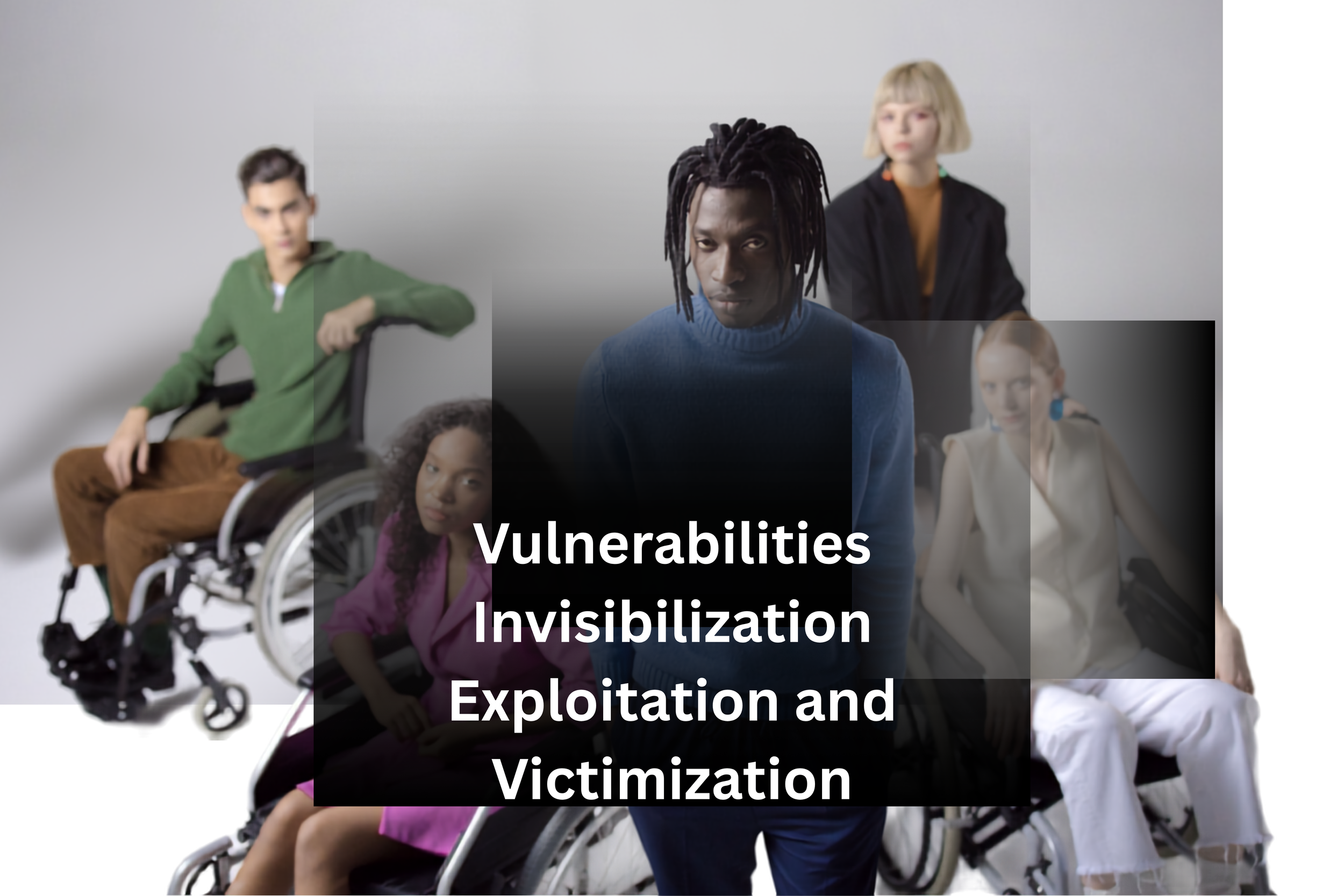
This blog will explore this topic and identify how each of us can develop greater awareness of the available research on how disability and human trafficking intersect, emphasizing the significance of vulnerability, invisibilization, and exploitation.
What we know & what we don’t know in 2026
Ironically, one of the first cases recognized as human trafficking in the United States occurred when 55 Mexican nationals who were deaf were brought by a trafficker to New York City to beg and sell trinkets on the subway in a peddling and begging ring in the 1990s. The Trafficking Victims Protection Act (2000) included tools to hold traffickers accountable for trafficking people with disabilities (Human Trafficking Legal Center Pro Bono Legal Center 2016). In other words, the fact that persons with disabilities are vulnerable to human trafficking has been documented in government and private sector literature for many decades. Yet this intersection remains under-researched in 2026.
The Disability Justice Resource Center makes the following points:
Women with disabilities report experiencing sexual violence at nearly twice the rate of non-disabled women, with the highest risk among those with cognitive or multiple disabilities.
People with disabilities are victims of violent crimes, physical and sexual abuse, neglect, and exploitation at much higher rates than their peers without disabilities.
Individuals with developmental disabilities have a higher risk of experiencing medical and physical neglect.
(Minnesota Governor’s Council on Developmental Disabilities, 2026)
Moreover, people with disabilities have been isolated at home and segregated in institutions and “special” schools. Isolation contributes to invisibilization and vulnerability, which in turn increases the risk of exploitation.
Despite increased risks, the exploitation of the disabled in all forms of trafficking is underrepresented in human trafficking research. There is a particular lack of research looking at labor trafficking of those with disabilities, who often remain invisible.
Pfeffer, Barrick, Bradshaw, Tueller, and Aranguren (2025) document that construction workers with disabilities experience higher rates of labor trafficking, despite supposedly “protective” variables such as being born in the U.S. and full-time employment status.
In addition, many human trafficking survivors experience long-term psychological and physical health issues that often go unrecognized and unaddressed. Pre-existing disabilities get worse; new ones develop.
Parallel Realities, Intersecting Outcomes
Vulnerabilities
It is well-established that traffickers exploit areas of vulnerability such as poverty, housing insecurity, substance use, migration, effects of environmental crises, LGBTQIA and BIPOC status, history of abuse, and more. Disabilities exist alongside all of these factors and create a unique set of additional vulnerabilities. For example, an adult or elder with physical disabilities needs a live-in caregiver to help them with basic needs. This dependence makes the disabled person vulnerable to benefits trafficking, in which an unscrupulous caregiver coerces the patient into having their benefits money siphoned off by their caregiver/trafficker. This occurs within families as well as with paid caregivers. There are also cases in which disabled women, including older women, are sex trafficked in exchange for help with food and basic care.
Peterka-Benton and Bowman (2025) address the under-researched intersection of disabilities and human trafficking in the Editors’ Introduction to a special issue of the Journal of Human Trafficking:
Human trafficking research remains a broad area of study that has not adequately covered many specific populations, services, and considerations relevant to the field…The relationship between trafficking experiences and disabilities is complex. Individuals with preexisting disabilities may be more vulnerable to trafficking due to inadequate social safety nets….[there is] deliberate targeting of individuals with intellectual disabilities by traffickers…[and] traffickers may exploit the need for essential services-such as therapy, rehabilitation, and healthcare-to entrap individuals with disabilities who may otherwise lack access to these treatments (2025, p.1).
It is estimated that one in four of us live with some sort of disability. We currently have little to no data on how many of us have experienced trafficking during our lifespans. A topic which both my lived experience and diverse literature support is that of invisibilization: being disabled often leads to marginalization, isolation, and stigmatization. Our strongly ableist culture then “invisibilizes” us, which further increases our vulnerability to victimization. Next we will look at the intersections of those concepts.
Invisibilization
The concept of invisibilization draws on several key thinkers (Ellison, Honneth, Illouz) and is synthesized in Herzog’s Invisibilization of Suffering (2020). He points out that excluded and marginalized groups “often have problems making their suffering heard in the public space, given that suffering stems from exclusion as well as other sources” (2020, p. 71). Moreover, social invisibilization is a social pathology that can have damaging effects on an individual’s sense of self and self-worth.
To be “invisibilized,” the person must first be “visibilized,” deemed unworthy and stigmatized by the viewer, and then deliberately ignored. For example, the nurse in the urgent care clinic sees a 40-year-old woman with intellectual disabilities and walking with a walker, presenting with vague complaints related to urinary problems and pelvic pain. The woman is accompanied by a woman who identifies as her caregiver and has the patient’s ID and insurance card. The nurse notices that the patient defers to the “caregiver” to answer questions and has visible bruises on her arms and lower legs. The patient is quickly assessed, diagnosed with a bladder infection and mild anemia, given the appropriate prescriptions, and referred to her primary care clinic.
The patient is seen as a female with a UTI (urinary tract infection), the dynamics between her and her “caregiver” are not questioned, nor are the bruises, because they can be explained by the anemia. It all makes sense when you deliberately invisibilize the person. If the nurse “saw” the patient, they would note several disabilities, impaired ability to communicate and to manage her self-care, evidence of public benefits, and thus areas of vulnerability that increase her risk of being exploited. The physical symptoms could be explained by her lab results, and they could be red flags for physical and/or sexual abuse. The caregiver could be exploiting the patient via benefits trafficking, sex trafficking, or labor trafficking (begging and pandering, domestic servitude). By visibilizing the patient, the nurse recognizes the need to look deeper, to assess for vulnerabilities, and to remember that being disabled places a person at increased risk for abuse and exploitation.
Borderon et al. (2021) connect theoretical discussions of invisibilization in research. They summarize the issue as follows:
Building on significant literature on invisibility in survey data focused on hard-to-reach and under-sampled populations, we expand the idea of invisibility to all stages of the research process…The production of invisibility is an active process in which vulnerable individuals and their experiences are made invisible during distinct phases of the research process and constitutes an injustice (Borderon, Best, Bailey, Hopping, Dove, and Cervantes de Blois, 2021, p.1).
Research teams decide who is made visible based on the questions they choose to focus on, geographic biases (resulting in understudied regions and topics in both the Global North and Global South), how research participants are recruited, and how the study is funded.
Meshelemiah, Rojas, Steinke, Carson, and Haegele (2025) further expand the discussion to look at the intersections of disabilities, discrimination, and racism in the lived experience of BIPOC trafficked women. Their research showed that the intersection of disability and human trafficking is often overlooked in the research, despite studies showing that disabled girls are more likely to experience sex trafficking than their nondisabled peers, and that “the experiences of Black, Indigenous, People of Color (BIPOC) who are female, sex-trafficked, and disabled are virtually absent in the human-trafficking discourse” (2025, p. 55).
They propose that Disability Critical Race Theory (DisCrit) can provide insight into forces affecting both the lives of disabled BIPOC trafficking victims and how we as researchers can better address the complex issues and myriad layers of oppression experienced by this population. DisCrit looks at how racism and ableism circulate in often invisible ways, how being labeled as disabled and “raced” sets a person outside Western Anglocentric norms, and affirms that “it is important to recognize that racialized identities and systemic structures harm and make disabled BIPOC women with trafficking histories hyper-invisible and left without resources” (p. 68).
Exploitation and Victimization
The field of victimology provides some insight into why disability status can impact victimization risk. In short, traffickers often take advantage of those seen as easily manipulated, those without social competence and communication, those without strong family/community relationships, and those with unmet needs for essential survival resources such as food, physical care, and transportation to medical care. The literature also supports that those with intellectual disabilities and neurodivergence may be more easily exploited due to myriad variables affecting communication, situational awareness, judgment, and the like. Imagine a runaway trans youth of color who is also developmentally disabled and has scoliosis: what potential areas of vulnerability would be opportunities for traffickers to exploit and victimize?
Lessons Learned from Survivors
Once again, I refer you to the Journal of Human Trafficking Special Issue exploring the intersection of disabilities and human trafficking. Several articles focus on the consequences of sex and labor trafficking on persons with and without disabilities. In summary, research documents consequences in five domains: physical, emotional/psychological, social, work/school, and financial (Krushas and Kulig, 2025, p. 38).
It is significant that this issue focuses on sex and labor trafficking; I did not see studies looking at other forms of trafficking such as organ trafficking, child soldiering, forced marriage, and surrogacy/infant trafficking. As noted above, the issues faced by BIPOC women differ from those of males of any race, or those trafficked for monetizable body parts (i.e., kidneys, livers, ova). What lessons have you learned from your work with survivors? Now we must pivot from learning about this understudied problem to steps to address it.

Conclusion and Call for Action
Ableism, racism, sexism, and otherism are prominent and dangerous threads of our national tapestry, whether we acknowledge them or not. We may not see how these threads inform and bias our anti-trafficking work until voices of truth emerge from the margins and compel us to listen. Robinson, Peterka-Benton, and Crowe (2025) interviewed a cisgender white female survivor of sex and labor trafficking, as well as multiple physical disabilities and unaddressed mental health issues. This survivor identified that the preconceived biases she experienced were different and seemingly more sympathetic than those experienced by BIPOC, LGBTQIA, and immigrant survivors. The authors state:
The lack of empathy and tolerance for trauma responses in members of the global majority, the lack of tolerance of different cultures and religions, and the fact that systems, organizations, and their programs are built on a very Anglocentric mind-set create inhospitable environments for survivors who aren’t able to fit the mold of being white or the “perfect victim” (2025, p. 104).
I would add that this “Anglocentric mind-set” is also ableist, patriarchal, classist, and ageist. So what’s next? How do we take the limited data on disabilities and human trafficking and translate it into meaningful research and public health interventions?
As a nurse, I can both educate my colleagues on what to assess for in ALL patients, including the ones that we would not “expect” to be sex trafficking victims (i.e., older white women on disability pensions) or labor trafficking victims (i.e., adults with intellectual disabilities who are forced into domestic servitude or begging to get housed and fed). As a disabled senior and disability activist, I can share what I know with my peers about how we can protect ourselves and each other. How can you take this information as a “call to action”?
If we become vulnerable due to disabilities, socioeconomic insecurities, or other factors, we become invisibilized and more likely to be exploited. Disability can happen to anyone, at any age, at any time, rich or poor; no one is exempt.
We have all learned that “trafficking can happen to anyone”; now we know that “anyone” includes the disabled, the intellectually challenged, the neurodivergent, and the elderly, regardless of color, ethnicity, gender, class, race, citizenship, or zip code.
References
Borderon, M., Best, K. B., Bailey, K., Hopping, D. L, Dove, M., and Cerventes de Blois, C. L. (2021). The risks of invisibilization of populations and places in environment-migration research. Humanities and Social Sciences Communications, 8, 314 (2021). https://doi.org/101057/s41599-021-00999-0
Human Trafficking Legal Center Pro Bono Legal Center (2016). Trafficking of persons with disabilities in the United States Fact Sheet. The Human Trafficking Legal Center. https://htlegalcenter.org/wp–content/uploads/Trafficking-of-Persons-with-Disabilities-in-the-United-States-Fact-Sheet.pdf
Krushas, A.E. and Kulig, T.C. (2025). Exploring consequences of sex trafficking victimization among individuals with and without disabilities. Journal of Human Trafficking. No. 11, No. 1, 38-54. https://doi.org/10.1080/23322705.2024.2426941/
Meshelemiah, J. C. A., Rojas, F.A., Steinke, H. R., Carson, M., and Haegele, J.A. (2025) The complex and marginalized experiences of BIPOC trafficked women: An examination of disabilities, ACEs, Discrimination, and Racism. Journal of Human Trafficking. 2025, Vol. 11, No. 1, 55-72. https://doi.org/10.1080/23322705.2024.2426938
Minnesota Governor’s Council on Developmental Disabilities. (2026). Dehumanization, discrimination, and segregation Disability Justice. https://disabilityjustice.org/justice-denied/dehumanization-discrimination-and-segregation/
Minnesota Governor’s Council on Developmental Disabilities. (2026). Types of abuses and justice denied resources. Disability Justice. https://disabilityjustice.org/justice-denied/types-of abuses-and-resources/
Peterka-Benton, D. and Bowman, M.E. (2025). The intersection of human trafficking and disabilities: Editors’ introduction to the Special Issue. Journal of Human Trafficking. 2025, Vol. 11, No. 1-3. https://doi.org/10.1080/23322705.2024.2430894
Pfeffer, R., Barrick, K., Bradshaw, M., Tueller, S., and Aranguren, N. (2025). Including measures of disability in prevalence studies: Lessons from a prevalence estimation study of labor trafficking in the construction industry in Houston.
Robinson, C., Peterka-Benton, D., and Crowe, T. (2025). Unveiling the long-term challenges: Disabilities and post-human trafficking survival- A survivor perspective, Journal of Human Trafficking 2025, Vol. 11, No. 1, 98-109. https://doi.org/10.1080/23322705.2024.2430895
About the Author
Wendy Stiver, RN, CCM, BSN, MA is a Research Scholar with the Global Association of Human Trafficking Scholars (GAHTS). She has been a registered nurse since 1981. Throughout her career, she has explored the intersection between nursing and social justice in a variety of venues: working in an AIDS hospice in Los Angeles, organizing the local chapter of the Transcultural Nursing Society in the early 1990s, and developing continuing education texts and courses about human trafficking, domestic violence, and impairment in the workplace for nurses.