
Faith in Action: Faith-Based Organizations in Anti-Trafficking Work

By Wendy Stiver, RN, CCM, BSN, MA; Charles Hounmenou, PhD & David Corliss, PhD
Published September 28, 2026
Introduction
This blog is the latest in a series exploring the intersection of faith, organized religion, and human trafficking. The series began with Glenn Miles and Jarrett Davis’s piece, “Where is the Church When LGBTQ+ People Come Knocking?: Christian faith-based organisations and the unfinished mandate to serve LGBTQ+ people in context of vulnerability and exploitation” (April 28, 2026), followed by Matthew Clarke and Wendy Stiver’s blog, “New Forms of Slavery in the World of AI: Reflections on Pope Leo XIV’s encyclical letter Magnifica Humanitas” (June 29, 2026).
This month’s blog aims to broaden the lens beyond the previous works and provide a history-informed survey of faith-based organizations (FBOs) from Christian, Jewish, and Muslim traditions that provide anti-trafficking services. FBOs are important stakeholders in the fight against human trafficking in the U.S., U.K., and the Global South. In essence, “an FBO is an organization with ties to a religious institution and an underpinning faith ethos” (Hounmenou, 2023, p. 1). Some FBOs are compelled by their sacred texts to provide services to oppressed groups with no efforts to proselytize or convert those served.
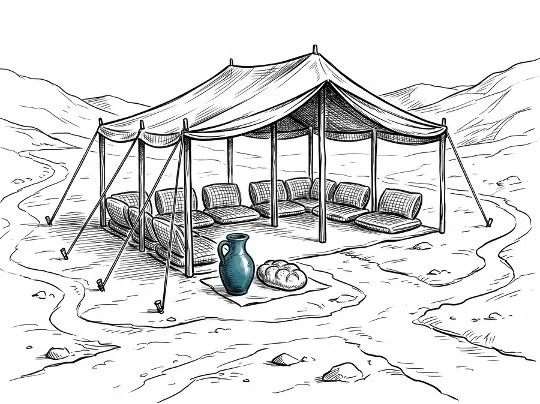
Jewish tradition remembers Abraham’s tent as open on all four sides, so no traveler had to search for the door. Welcome to the stranger is a teaching all three traditions share.
A limited body of scholarship evaluates the nature, scope, and efficacy of FBOs, which has compounded existing misperceptions about their role in anti-trafficking work. There is also limited discussion of the intersectionality between religiously identified anti-trafficking organizations, autonomy of the people being served, and the overlays of racism and colonialism.
Given the nature of our work, many of us have collaborated or partnered with FBOs. David Corliss shares his perspective on FBOs based on his anti-trafficking work experience. Wendy Stiver will discuss both Jewish anti-trafficking organizations and provide theoretical and historical context to help evaluate the roles that FBOs play in the broader culture. Finally, Charles Hounmenou writes about Islamic faith and ethics in anti-trafficking work.
Christian Anti-Trafficking Efforts: A complicated legacy
We begin with this story shared by David Corliss (edited for clarity):
We’ve heard this kind of story before. A 16-year-old is captured, falls victim to labor trafficking, and soon finds himself doing farm labor in a foreign country. But this story is…just a bit different. Because it was early in the fifth century, Rome ruled Britain, and forced labor was perfectly legal. Unlike most, our young man managed to escape, and return home. Supported by a local religious community, this survivor became a member of a faith-based anti-trafficking organization (FBO), eventually rising to become an outstanding leader. So he was sent by his church back on a mission to Ireland, where he was once held in bondage for years. There, he eventually became known for other things, but some in the faith-based anti-trafficking community still remember St. Patrick as an outstanding early voice in condemning slavery and exploited labor and working to end it as an expression of his faith. (Next March 17th, skip the green beer and remember St. Patrick as an outstanding voice for the freedom and dignity of all humankind.)

Enslaved in Ireland as a teenager, Patrick later returned to the land where he had been held, and is remembered as an early voice against slavery.
Patrick worked to set the captive free. 1600 years later, so many people around the world are still waiting. FBOs across the religious spectrum engage in this important work today as part of their calling to serve others. Much of this work focuses on direct services to individuals, including finding victims, providing shelter, and supporting survivors as they re-build their lives. This makes them excellent partners for researchers seeking to bridge academic research to practical applications.
Faith-based anti-trafficking organizations serve all in need while often drawing financial and logistical support primarily from their own wider religious community. If you happen to be a part of a religious organization now, it’s likely there is already an anti-trafficking team you can connect to. FBOs in the anti-trafficking space often work across denominational lines, partnering with all others of any religious background or none. For example, I (David) often find myself, a Quaker, partnering with Roman Catholic service organizations such as the Alliance to End Human Trafficking (formerly Catholic Sisters Against Human Trafficking). Folks that couldn’t be farther apart on Sunday morning (or Saturday morning or Friday afternoon or whenever…) are united in seeking to find and serve victims, survivors, and thrivers.
FBOs can be identified using a web search. Be sure to include in your search the particular area of anti-trafficking work. Also, check out MinistryWatch, an organization that tracks and rates ministry FBOs in all areas. Their website has a category for anti-trafficking organizations. To find ratings on FBOs in anti-trafficking, go to their webpage at ministrywatch.com and click on the button for Compare Ministries. From there, click on the drop-down menu “Filter for Sector” and select “Anti-Trafficking”.
While St Patrick may have condemned labor exploitation in Ireland, that is not a universal feature of efforts to spread the Gospel. For example, when Spain claimed what is now California for the Crown, friars such as Fr Junipero Serra (1713-1784) were sent along with the soldiers to establish a chain of Catholic missions throughout the territory to both strengthen Spanish control and to bring salvation to the indigenous population. Pope Francis canonized Serra in 2015.
The Mission system has a complicated legacy, including involuntary servitude, sexual abuse, erasure of indigenous languages, and the introduction of European diseases that weakened or killed large numbers of native tribes. The effects of colonization and oppression of the native peoples of California are still present in 2026.
It is significant that Pope Leo XIV apologized for the Catholic Church’s complicity in allowing, and at times supporting, slavery. In Magnifica Humanitas, he wrote: “For this, in the name of the Church, I sincerely ask for pardon” (Leo XIV, 2026). He also addressed how colonialism historically used subjugated people to mine natural resources, to produce food crops, and other forms of forced labor (Clarke & Stiver, 2026).
Miles and Davis (2026) presented three case studies that illustrated the following points:
FBOs working with LGBTQ+ populations report uncertain church funding because “the constituency is politically uncomfortable.”
In Southeast Asia, there has been a “well-documented pattern in which male victims of sexual exploitation—and particularly boys exploited in same-sex contexts—are rendered too complicated for the faith-based sector to engage.”
“How do we hold one another accountable—as scholars, as practitioners, and as people of faith–when our work falls short of the standards we profess?”
Dube (2021) expanded this discussion to look at the anti-trafficking work of Christian missions in South Africa. Dube’s primary thesis is that:
“In similar ways to the paternalistic early Christian missionary approach to indigenous religious practices, the politics of paternalism persist to this day in the realm of Christian organisations working in anti-slavery in South Africa” (p. 1).
Dube concludes by calling for more research into the work of Christian FBOs in South Africa, and that “the problematic and fruitful use of Christian discourses of anti-slavery/trafficking in South Africa highlights the ways in which some religious organisations use specifically religious configurations of redemption and restoration to challenge modern-day anti-slavery/trafficking.”
In short, Christian organizations have played a major role in anti-trafficking efforts, with abolitionist and social justice movements in the U.K. and U.S., influencing law and policy development as well as serving the exploited and oppressed. As with all human institutions, FBOs are prone to the foibles of their human leadership as well as the beauty and honor their members find in the faith traditions that inspire their work.
Judaism: “Tzedek, tzedek tirdof (Deuteronomy 16:20)”
Translated “justice, justice you shall pursue,” this passage from the Torah has been a guiding principle of Jewish anti-trafficking organizations. Perhaps the central narrative of the Hebrew Bible is the experience of slavery followed by Divine redemption and liberation: a narrative that has both informed Jewish concepts of social justice and inspired other oppressed people to strive for freedom. Another key teaching in the Torah is the commandment to care for the stranger, the most common commandment in the Jewish sacred text. Parallel to this commandment is the emphasis on protecting the widow, the marginalized, and the most vulnerable woven throughout both the Hebrew Bible and later in the teachings of Jesus.
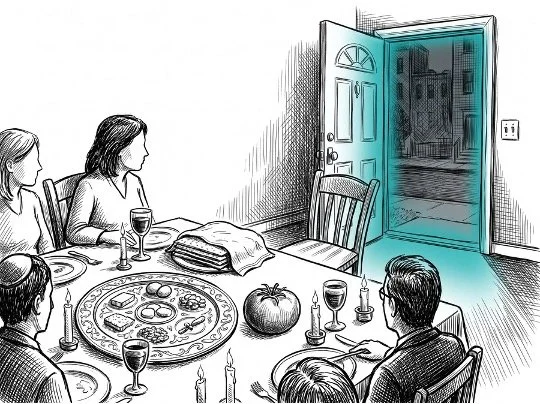
The Passover seder retells the journey from slavery to freedom and opens with an invitation: “Let all who are hungry come and eat.”
Despite this, Judaism, as well as Christianity and Islam, originated in a place and time characterized by widespread slavery. Moreover, a small percentage of Jews in the antebellum U.S. owned slaves, and Louisiana plantation owner Judah P. Benjamin was appointed to the Confederate cabinet.
That said, Jewish organizations are active in anti-trafficking work at both the local and national level in the U.S., and in Israel. For example, the National Council of Jewish Women (NCJW) was founded in 1893 to address the needs of women and children.
Guiding values include addressing the root causes of human trafficking (including economic disequities and unfair immigration policies), dismantling the culture that promotes objectification and gender-based violence, elevating the voices and lived experience of survivors, and rooting all efforts in justice and compassion (NCJW Ending Human Trafficking: A Statement of Jewish Values, 2018).
The NCJW also works at the local level through the Jewish Coalition to End Human Trafficking (JCEHT) in San Francisco, California. Similarly, the Jewish Community Against Sex Trafficking (JCAST) Chicago provides services in the Midwest.
T’ruah: The Rabbinic Call for Human Rights empowers rabbis and cantors to be moral voices calling for democracy and human rights for all people in the U.S., Canada, Israel, and the occupied Palestinian territories. T’ruah collaborates with a number of interfaith organizations and “launched the Jewish Campaign to End Slavery and Human Trafficking. T’ruah is leading the charge from within the Jewish community against modern-day slavery and human trafficking, focusing on the issue of slavery in supply chains through a collaboration with the Coalition of Immokalee Workers. By educating the Jewish community about the issue of forced labor and equipping individuals to take action, T’ruah engages the Jewish community to end trafficking and empowers individuals to make a difference” (T’ruah, n.d.).
Additional resources may be found at the local Jewish Federation, HIAS (originally the Hebrew Immigrant Aid Society) formed in the 1880s in New York City (now international), and social justice interfaith organizations in cities such as Los Angeles.
Faith, Islamic Ethics, and Anti-Trafficking Engagement
Muslim faith-based organizations (MFBOs), such as mosque committees, Islamic charities, community groups, and transnational NGOs, are involved in anti-trafficking efforts based on Islamic ethics, community networks, and faith-based motivations for social welfare. MFBOs often frame antitrafficking activities as religious obligations, enhancing legitimacy within Muslim communities and mobilizing volunteers. Their activities span prevention, protection, advocacy, and humanitarian response.
Prevention is one of the most documented areas of MFBO engagement. Mosques, women’s circles, Islamic schools, and youth programs disseminate information about recruitment tactics, migration risks, and legal rights. MFBOs conduct mosque‑led awareness campaigns and partner with agencies such as IOM (IOM, 2025) and UNICEF USA (2017). UNICEF’s interfaith guidance identifies Muslim communities as key partners and recommends faith-tailored messaging (UNICEF USA, 2017).
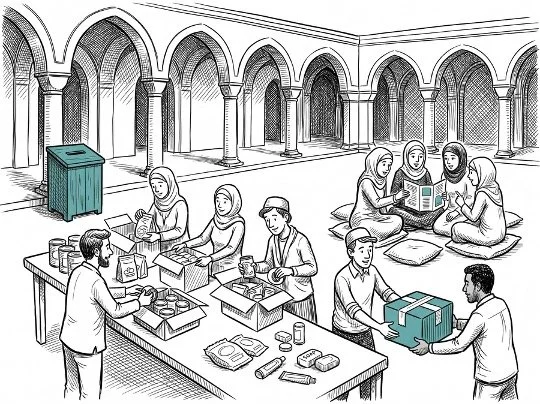
Prevention often starts at the mosque: volunteers packing emergency parcels, women’s circles sharing information on recruitment risks, and zakāt and ṣadaqah funding the work.
Two mechanisms underpin MFBO anti-trafficking prevention work. First, community embeddedness allows MFBOs to reach at‑risk groups—women, migrants, youth—and identify suspicious recruitment patterns early. Second, moral framing positions trafficking as a violation of Islamic principles, motivating preventive behaviors. However, prevention efforts often lack standardized curricula, monitoring systems, and evaluation frameworks.
Islamic philanthropic traditions—zakāt, ṣadaqah, and waqf—are increasingly used to support anti-trafficking initiatives. Partnerships such as Muslim Charity’s collaboration with IOM under the Islamic Philanthropy Fund illustrate efforts to align Islamic giving with global anti-trafficking systems (IOM, 2025). Emerging scholarship highlights Islamic philanthropy's potential to strengthen anti-trafficking infrastructure (Bawono, Huda, Prayitno, & Siswanto, 2025).
MFBOs provide shelter, psychosocial support, legal referrals, and reintegration assistance. Islamic charities and mosque committees supply emergency shelter, food, and financial aid, using faith-framed counseling and community networks to support reintegration. Some MFBOs operate women’s shelters or partner with secular NGOs to deliver trauma-informed care that respects cultural and religious norms, including halal food and gender-concordant staffing. Large Muslim non-governmental organizations like Islamic Relief have implemented modern slavery policies that incorporate faith-aligned messaging and reintegration assistance (Islamic Relief Worldwide, 2024; UNICEF USA, 2017).
Transnational Islamic NGOs such as Islamic Relief and Muslim Aid also incorporate anti-trafficking components into humanitarian and migration programs. They address structural drivers—poverty, displacement, irregular migration—through cash assistance, livelihood programs, and legal aid. Their global networks facilitate cross‑border referrals, though documentation varies in rigor.
MFBOs’ policy roles are less visible. Some advocate for stronger anti-trafficking laws, victim protection policies, and migrant labor reforms, often collaborating with intergovernmental organizations and secular NGOs (UNODC, 2009). Islamic scholars contribute theological and legal arguments against trafficking, framing it as incompatible with Islamic principles of dignity, justice, and the prohibition of enslavement (Bawono et al., 2025; UNODC, 2009).
MFBOs participate in task forces, national referral mechanisms, and interfaith coalitions. The IOM–Muslim Charity memorandum of understanding demonstrates how MFBOs integrate Islamic philanthropy and community outreach into broader antitrafficking systems (IOM, 2025). MFBOs’ engagement varies regionally, ranging from awareness campaigns and rescue operations to migrant worker protection in different parts of Asia. In Europe and North America, MFBOs focus on culturally sensitive services and advocacy for immigrant victims.
Although mosque-based outreach organizations make substantial contributions to prevention and culturally sensitive protection of vulnerable groups, few studies assess MFBO effectiveness and their influence on policy change and prosecution outcomes. MFBOs’ strengths—community trust, moral authority, and transnational networks—make them valuable partners in multisectoral antitrafficking responses.
As with the other Abrahamic faiths, Muslim involvement in slave trade and human trafficking is complicated and contradictory: neither Judaism, Christianity, nor Islam are blameless in this regard. Slavery in Arabia predated the establishment of Islam, and continued as the religion developed and spread. Peoples conquered by Islamic dynasties were enslaved, often trading those subjugated in Europe, sub-Saharan Africa, parts of Asia, and the Middle East to the Americas as well as in regions dominated by Islamic rule.
When ISIS enslaved Yazidi women and girls in 2014, justifying their actions in Islam, more than 120 Muslim scholars responded with an open letter to its leader, rejecting the reintroduction of slavery (“Open Letter to Dr. Ibrahim Awwad Al-Badri,” 2014). The same tradition was used both to condemn and to justify enslavement.
Conclusion and Call to Action
We have surveyed FBOs in the three Abrahamic faiths. We have endeavored to provide some nuance and context regarding a complex topic. At its simplest, humans of these three traditions have been both enslaved and enslavers. The faithful of these three traditions have sought to put their faith’s tenets of social justice, compassion, and kindness to the stranger into action to fight human trafficking.
FBOs are strong partners in our work, and yet may represent legacies of colonization, racism, oppression, and inequality. Our job as researchers is to keep our eyes, ears, and hearts close to the ground and the people whom we seek to serve. We need to ask ourselves a series of questions as we contemplate making referrals to faith-based anti-trafficking organizations:
How are they receiving us, whether we represent FBOs, NGOs, or government agencies?
Are we seen as helpers, neocolonialists, or a combination?
How are the FBOs regarded by populations who do not follow the religion of the FBO? Do the people have autonomy to maintain their faith traditions?
Is coercion in the form of converting to the religion of the FBOs the price for a meal, a bed in a shelter, and freedom?
How welcoming are the FBO’s anti-trafficking services to LGBTQ+ and nonbinary people? Victims of labor and organ trafficking in addition to sex trafficking? Victims of forced marriage? Boys and men? The disabled and elderly? People living with HIV? Mental illness?
Are survivors in paid leadership roles, or only invited to tell their stories?
Does the FBO in question report outcome studies, sources of funding, scope of service, and other granular data?
We invite your thoughts and commentary. We also welcome those who have both worked with and been served by FBOs to share their lived experiences to encourage ongoing dialogue.
We will explore Buddhist, Hindu, and Indigenous anti-trafficking efforts in a future installment of this series focusing on the intersections between faith, religious institutions, and human trafficking work.
References
Bawono, B. T., Huda, M. N., Prayitno, A. H., & Siswanto, M. A. (2025). Human trafficking and the relevance of hifz al-nafs and hifz al-’ird in contemporary Islamic legal ethics. MILRev: Metro Islamic Law Review, 4(1), 597–618. https://doi.org/10.32332/milrev.v4i1.10694
Clarke, M. C., & Stiver, W. (2026, June 29). New forms of slavery in the world of AI: Reflections on Pope Leo XIV’s encyclical letter Magnifica Humanitas. Global Association of Human Trafficking Scholars. https://www.gahts.com/twg-blog-posts-1/2026/6/29/new-forms-of-slavery-in-the-world-of-ai
Dube, S. I. (2021). Redemption and restoration: The anti-slavery/trafficking call of Christian missions in South Africa today. HTS Teologiese Studies/Theological Studies, 77(4), a6358. https://doi.org/10.4102/hts.v77i4.6358
Hounmenou, C. (2023). Experiences of faith-based organizations as key stakeholders in policy responses to human trafficking. Societies, 13(8), 193. https://doi.org/10.3390/soc13080193
International Organization for Migration. (2025, July 19). Muslim Charity joins IOM Islamic Philanthropy Fund with USD 1 million to tackle trafficking. https://www.iom.int/news/muslim-charity-joins-iom-islamic-philanthropy-fund-usd-1-million-tackle-trafficking
Islamic Relief Worldwide. (2024). Modern slavery statement 2023. https://islamic-relief.org/wp-content/uploads/2024/07/Modern-Slavery-Statement-2023.pdf
Leo XIV. (2026). Magnifica humanitas [Encyclical letter]. Holy See. https://www.vatican.va/content/leo-xiv/en/encyclical.
Miles, G., & Davis, J. (2026, April 28). Where is the church when LGBTQ+ people come knocking? Christian faith-based organisations and the unfinished mandate to serve LGBTQ+ people in contexts of vulnerability and exploitation. Global Association of Human Trafficking Scholars. https://www.gahts.com/twg-blog-posts-1/2026/4/28/where-is-the-church-when-lgbtq-people-come-knocking
NCJW (2018). Ending human trafficking: A Jewish statement of values. Jewish Coalition Against Trafficking. https://www.ncjw.org/content/uploads/2018.
T’ruah (n.d.). Modern day slavery and human trafficking. The Rabbinic Call for Human Rights. https://truah.org/subject/human-trafficking/.
UNICEF USA. (2017). Interfaith toolkit to end trafficking. https://www.unicefusa.org/sites/default/files/ET17%20InterfaithToolkit_Global_FINALR1.pdf
United Nations Office on Drugs and Crime. (2009). Combating trafficking in persons in accordance with the principles of Islamic law. https://www.unodc.org/documents/human-trafficking/Islamic_Law_TIP_E_ebook_18_March_2010_V0985841.pdf
About the Authors
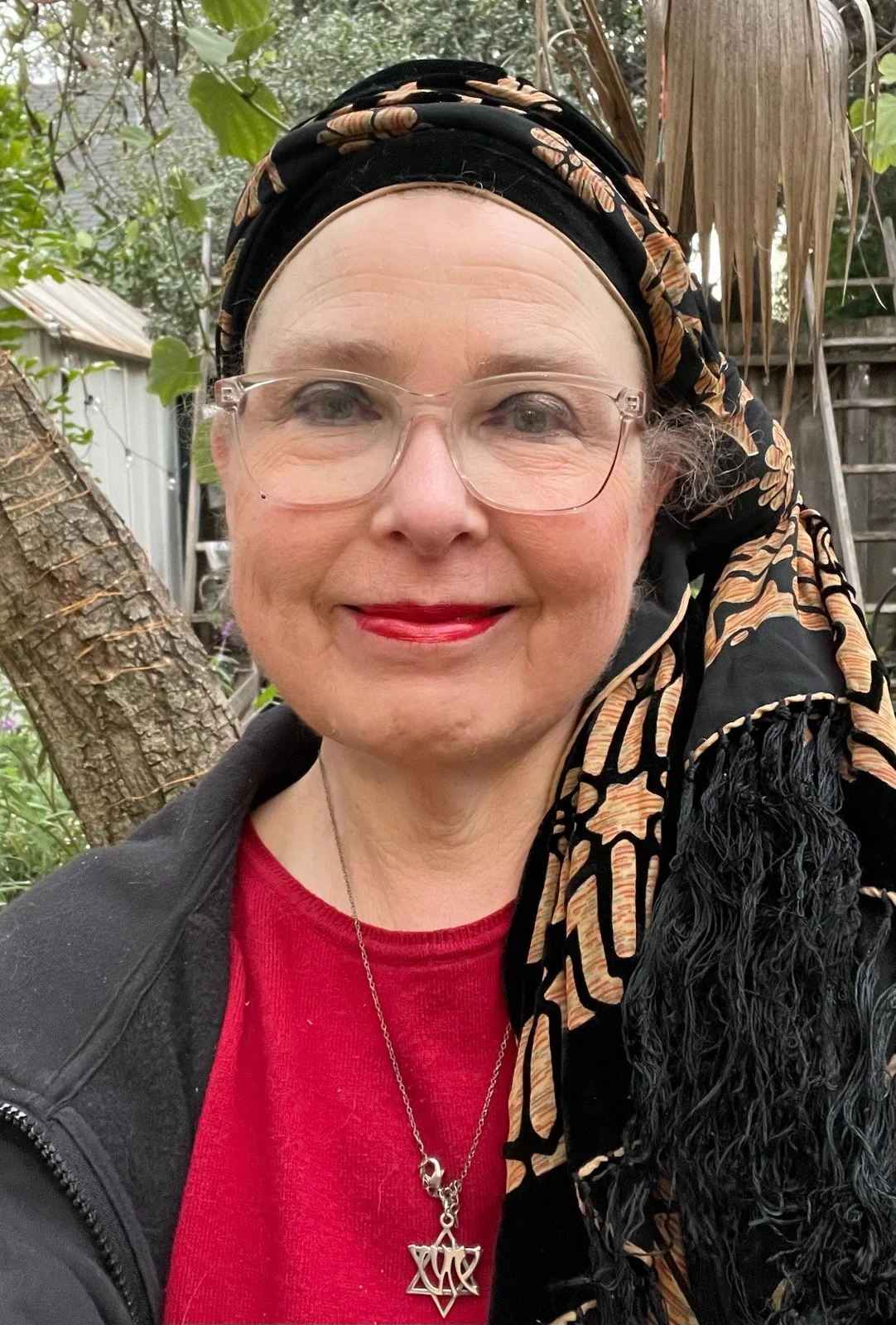
Wendy Stiver, SHC, RN, CCM, BSN, MA is a Registered Nurse, Research Scholar in the Global Association of Human Trafficking Scholars (GAHTS), and Co-Lead of the GAHTS Translational Research Workgroup. She teaches diverse topics in combating racism, racial and social justice, nursing, and human trafficking. Widely published in these areas, she is also active in interfaith activities within both the progressive Jewish tradition and as a fully Professed member of St. Hildegard's Community of Austin, Texas.
Charles Hounmenou, PhD is an Associate Professor at the Jane Addams College of Social Work, University of Illinois at Chicago (UIC). A former Fulbright scholar, Dr. Hounmenou is widely published in the human trafficking literature, and his work has focused on human trafficking in both the United States and Africa. He is a Senior Research Scholar and Board Member in the Global Association of Human Trafficking Scholars (GAHTS).
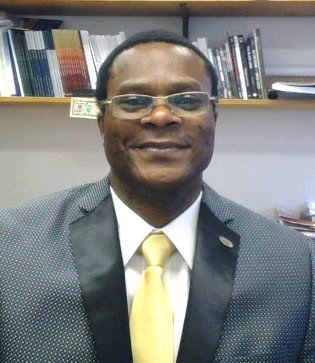
David Corliss, PhD is a Research Scholar in the Global Association of Human Trafficking Scholars (GAHTS) and the founder/director of Peace-Work, a cooperative of statisticians and data scientists who apply statistical methods to human trafficking research. Dr. Corliss holds a PhD in statistical astrophysics, and has published on topics related to how statistical methods can strengthen anti-trafficking work and scholarship.